SENS in Residence in Mae Sot
Over the past three years, the SENS work team has made strong connections with about 50 Myanmar teachers and youth in the border town of Mae Sot, Thailand. We did this—supported by friends in the region—by offering thoughtfully designed weekend workshops and one-day gatherings. Our participants were people who had fled the violence of Myanmar seeking safety and stability — many of them searching for work to sustain themselves and their families and often accepting pitiful wages to do so, many others hoping to use their time “in exile” to pursue higher studies. Under the constrained conditions for Myanmar people living in a Thai border town, perhaps without documents, they are united by a word we hear again and again: uncertainty.
Having glimpsed their conditions of life in our previous work, this autumn we’re taking a different approach. We realized the need for a safe and engaging learning environment for Myanmar teachers and young adults is simply too great to address in a weekend or two. We needed time — real time — to study Mae Sot, to listen deeply to the people forcibly displaced into a foreign country, and to build trusted connections that would help us design better programs for the future. The result is we are bringing a team trained in our annual residential three-month program—the School of English for Engaged Social Service or SENS—to take up residence in Mae Sot for a period of three months. We call this pilot program SENS in Residence in Mae Sot.
The Team and Our Approach
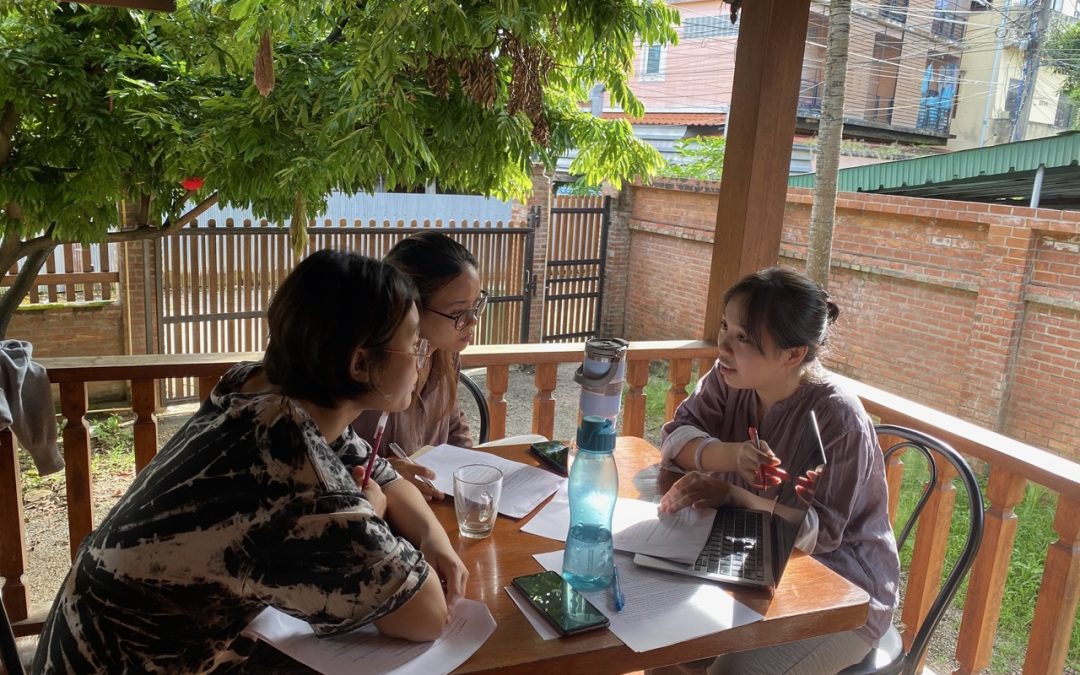
Working alongside our Director (Ted) and SENS program assistant (Au) is Lien, one of our SENS alumni from Vietnam. As an experienced English teacher and a woman, Lien brings something essential to this work: creating a strong sense of safety for our female participants. We have already seen how her teaching approach is fun, effective, and genuinely engaging. The laughter coming from the tutoring table on the porch outside reminds us of this from time to time.
Similar to what we do in our SENS international programs, we integrate language learning with personal support — through listening, Co-Counseling, games, and other activities. We deliberately bring people together from different backgrounds and ethnicities: Karen, Chin, Shan, Burmese — alongside our Vietnamese and American team members. We have seen that accepting and understanding diversity and differences between groups is key to building a long-lasting community of mutual caring and potential collaboration in work for a common benign future.
Learning from the Ground
Our team arrived in Mae Sot in early September with good intentions and substantial experience but not really realizing what it would take—and how long—to offer a set of well-organized classes that responded to this community’s needs. We had to accept a much slower entry into the community, and this gave us time in the first three weeks to do something more valuable than offering ready-made programs and schedules: we listened a lot. We interviewed applicants for our classes, spoke with people in our network, and slowly shaped programs that fit everyone’s actual lives, not our assumptions about them.
Those interviews gave us deeper insights into the lives of Myanmar people here in Mae Sot. Through listening to their stories, we were often deeply moved — and confronted with a vivid, sometimes painful picture of Mae Sot. We learned what it means to be treated as a second-class citizen, to live in constant uncertainty, and yet to keep showing up and seeking connection.
It took time to shape our classes, but that time was necessary.
What’s Happening Now
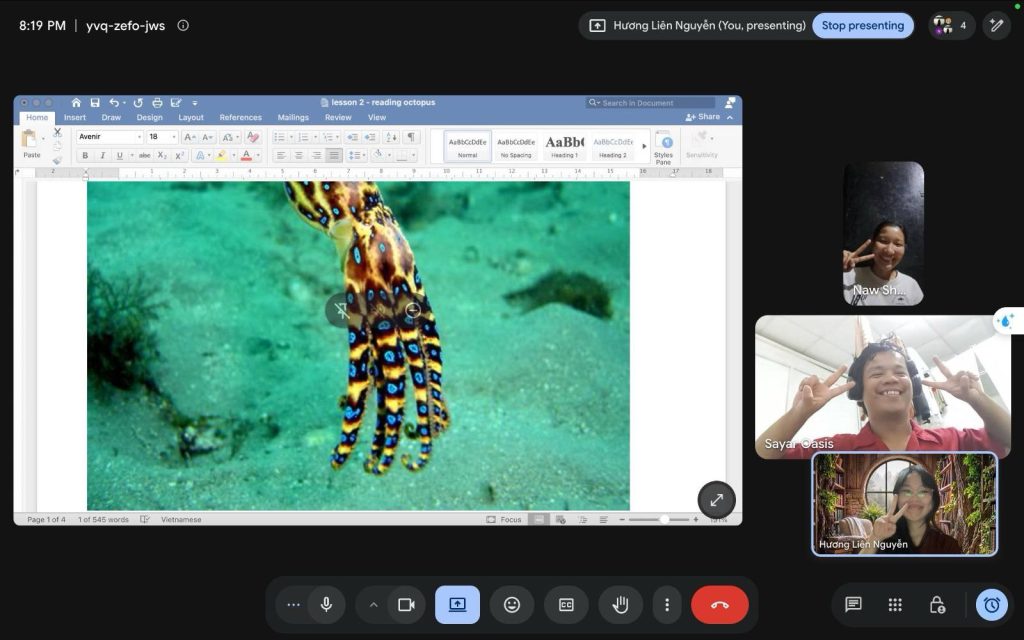
Lien and Au have already been meeting with different groups of Myanmar teachers and young adults to work on English. Many are eager to learn IELTS with Lien, who organizes both online and in-person classes to fit their busy schedules. Au offers basic English classes and pronunciation practice for a group of three teachers we met in 2023 — maintaining and deepening those relationships, while taking up an entire team of media workers as well.
The Weekend Ahead
On the weekend of October 3 and 4, we’re holding our first big-group sessions: our Director will facilitate a Co-Counseling class on Saturday (16 participants), a SENS English and Leadership class on Sunday (22 people), and on Monday a second Co-Counseling class for those free on weekdays (10 people).
We hope to see to it that everyone feels supported and safe — open to building new relationships with us and with each other. In fact, the importance for us of introducing Co-Counseling is that they can initiate peer listening sessions with each other even after we’re gone and only available to support them online. We hope they’ll feel at home every time they come to class. And we hope the community we’re building becomes a genuine network they can rely on, a place to heal and learn together, and a place that gives them the strength to apply their creativity to a world in great need of their thinking and energy.
That’s what we’re here to make possible.